This one belongs in an old cider mug, cloudy enough that you cannot quite see through it. Sip slowly. Meander with me a little while, from corn and cider to green glasses, fallen screens, political frames, and a rather tart remark, “We have the best politicians money can buy,” poured into the mix. Watch the shade fall on political certainty, especially the kind that assumes the public version is the whole story. Then speculate with me: when we hear a voice, see an image, and follow an argument, how much do we know about what has shaped what we are being shown, and what remains beyond our view?
Most of us know the turn in L. Frank Baum’s The Wonderful Wizard of Oz. Dorothy and her companions travel to meet the great Wizard, whose authority is sustained by a commanding voice and carefully managed appearances. Then Toto disturbs the screen, and the man behind it comes into view. What had seemed immense is being managed by an ordinary person using devices to create the effect.
The discovery does not make everything they experienced unreal. The voice was real. The fear and obedience it produced were real. What changes is their understanding of how the appearance was made. Once the screen falls, they can ask a different question: who is operating what we have been shown? Or, to borrow the line that will eventually find me later that day, “We have the best politicians money can buy.” If that suspicion is true, somewhere behind the appearance there ought to be something we can actually find.
My version of that old maxim arrived in a far less dramatic place. There was no booming voice, no curtain, no great machine hidden from view. There was corn, cider, a crowd, and somewhere in the middle of it all, a political argument.
I had entered a corn shucking competition at the Cornfest sharply dressed. If I was going to tear husks off corn in front of strangers, I would at least look good doing it. Looking good, it turns out, earns you no points. I was eliminated in the second round. The judges counted the ears I shucked, and I had fewer when the time ran out.
From there I went to the cider pressing. We threw the apples into an apple crusher, then spread the mash onto cheesecloth laid over wooden pressing racks. We folded the cloth over the mash and stacked the racks inside the old press. Then we worked the jack by hand, pressing the layers together until the juice ran through the cloth into the container below. The crushed pulp stayed behind. The juice was what people lined up for.
Of course, a day like that would not be complete without a political argument somewhere, and one arrived. I have strong political views. I keep them for my closest friends, people who know me well enough to hear my convictions and argue with me. We can have a heated debate, look at each other as if we have both gone mad, then get back to our lives, caring for each other without malice. Outside that close-knit circle, things can get nasty fast. I have little patience for dogma or for arguments whose assumptions nobody has bothered to examine.
The conversation reminded me of Judith Butler’s Frames of War: When Is Life Grievable? Butler describes framing as “selectively carving up experience” (p. 26). A frame directs our attention. It brings some people and events into view while leaving others at the edges, or outside the picture altogether. By the time we begin arguing, the terms of the argument may already have decided whose suffering deserves our attention.
Baum gives us another useful detail. Visitors to the Emerald City are required to wear green glasses. They encounter the city through lenses supplied at the gate. Butler’s frame works differently, but the image is useful: sometimes the question is not simply what we are looking at, but what has been placed between us and what we are looking at. In noticing the lens we begin to notice ourselves: how our perception is trained and how easily it can be guided.
Butler’s question about whose lives are grievable takes this further. Grievability concerns whether someone’s life is regarded as worth sustaining, whether their loss would matter. That regard has consequences while they are alive. Would we protect them from harm? Would we accept their suffering as the necessary cost of someone else’s security? A person can be visible in a political argument and still appear chiefly as a threat, a burden, or a number.
This is where I begin to ask who shapes the ideological war. Who has the means to make one account of events familiar enough to pass for common sense? Governments and political parties have an interest in the answer. So do media owners, donors, and organizations campaigning for change. Their influence differs, and the evidence has to be examined in each case. Money can buy reach and repetition. Institutional authority can make a disputed interpretation sound settled. We should ask whose interests a frame serves and what it requires us to overlook.
The events of January 6, 2021, illustrate how political arguments organize our attention. One account centres on the assault on police officers at the US Capitol, directing attention towards violence and accountability. Another centres on claims of unjust prosecution, directing attention towards the treatment of defendants and the exercise of state power. There was injustice somewhere in all of this, perhaps in more than one place, but it has become so muddied by competing frames that even the question of where injustice lies comes to us already framed.
Those emphases are evident in the Justice Department’s account and the pardon proclamation issued on January 20, 2025. Each asks us to begin somewhere, and that starting point matters. We still have to examine the evidence, distinguish between people’s actions, and assess the claims being made. I must also ask what my preferred account leaves outside the picture. Whose suffering do I recognize readily, and whose do I require to pass a political test before it matters?
Butler also reminds us that frames can fail. An image travels beyond its intended audience. A person’s testimony unsettles the account under which we had understood them. Something enters the picture that the familiar explanation cannot contain. Those who shape a message cannot guarantee how everyone will receive it.
When a frame falters, the story we’ve been given has to shift, making room for what had been kept at the margins.
The photograph of three-year-old Alan Kurdi offers another example. He drowned on September 2, 2015, when the boat carrying his family from Turkey towards Greece capsized. His mother and five-year-old brother also drowned. His father survived. The image of Alan’s body on a beach drew international attention to the dangers faced by people seeking refuge.
When migration is framed chiefly through border control, attention falls on who may enter, whether entry is lawful, and what responsibilities receiving communities can bear. Those questions deserve examination. Yet that frame can leave the people making the journey visible chiefly as numbers or problems to be managed. Their circumstances disappear from view. I read Alan’s photograph as a fracture in that frame. It brought a particular child’s death into the centre of the argument and made his loss difficult to treat as an abstraction.
The photograph has its own limits. It focuses our attention on a child whose vulnerability is immediately apparent. It cannot, by itself, explain the circumstances that brought his family onto that boat, the choices available to them, or the responsibilities of those who arranged the crossing. Nor does recognizing his loss guarantee that we will recognize the lives of adults making similar journeys. What happens to our concern when the person in the picture is someone we find harder to identify with? His life deserved protection before that image made his loss visible. So do lives that never become photographs.
I have to apply that scrutiny to my own convictions too. When suffering troubles my political loyalties, do I examine those loyalties, or explain the suffering away? Can I recognize a life as worth protecting when the person belongs to a group I distrust or don’t like? If my concern disappears at the boundary of my own side, then my frame has already done some of my thinking for me.
But I digress. I said I am no expert in politics or in the inner workings of international affairs. Then I told the person something I do believe: there is more to politics than meets the eye, and there seems to be a force behind it that most of us are not aware of.
I expected pushback. Instead, the person across from me paused and said there might be a point to that. Then came the old line: “We have the best politicians money can buy.”
We laughed, the way we laugh at something that is only half a joke.
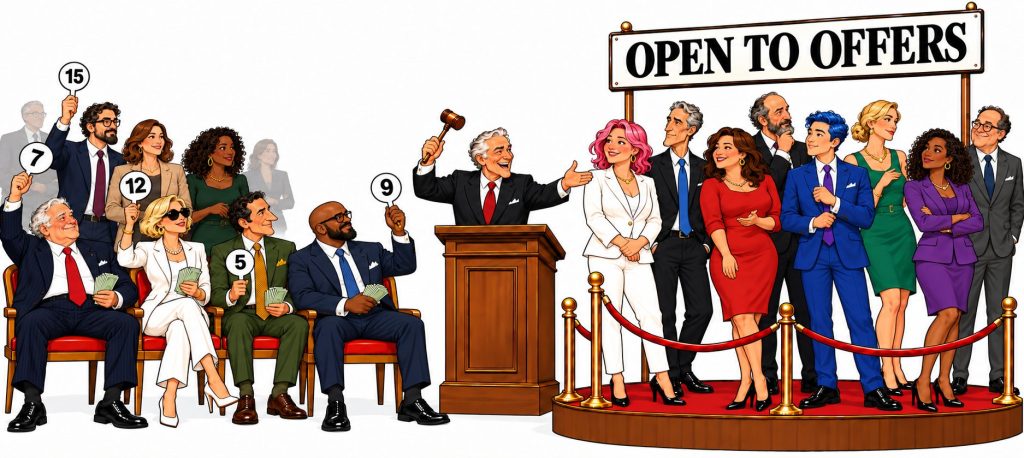
The saying has stayed with me. It names a suspicion many of us carry: the speeches and debates we watch are the visible part, and decisions may be shaped earlier, in rooms we are never invited into, by people whose names never appear on a ballot. Donors give. What do they expect in return?
The joke works because it imagines a figure behind the screen. Yet a suspicion, however plausible, is still a suspicion. If money has moved a political decision, there should be something to trace: donations, access, lobbying records, ownership, contracts, or some other demonstrable link. Otherwise I may simply have built my own Wizard and placed him behind the curtain.
I have watched politicians who seemed to act more like activists for a particular cause than representatives responsible for the wider public. The interests they served and the questions they asked sometimes seemed to offer little to ordinary people. One group’s hero is another group’s troublemaker. Their supporters may hear courage in a speech that their opponents hear as provocation. Questions about funding let us follow which interests are being served and who has the resources to keep them on the agenda. I found myself wondering whether these politicians were answering to those who could write the biggest cheque.
Some politicians also own media outlets. Ownership can give them influence over editorial priorities and over the people appointed to run those outlets. Public funding creates a different relationship. Where government funding contributes to salaries or operating costs, that financial connection is worth examining, although public funding by itself does not establish editorial control. The degree of independence depends in part on governance, legal safeguards, appointments, and protections for editorial autonomy.
Where the state owns or directly controls a media organization, the questions become sharper: who appoints its leadership? Who controls its budget? What protections exist for editorial independence? Can political interests be traced in what is covered, what is omitted, and which questions are pursued? For me, this takes the discussion of framing further. Political power may shape the arguments, the institutions that carry them, and the news through which the public encounters them. I want to know how that influence is exercised, what brings that influence into focus, and whose experience it leaves outside the picture.
What fascinates me, though, is the possibility that I am looking through my own frame. Perhaps that frame has a crack in it. The suspicion that politicians can be purchased raises a question: what evidence would establish that money determined a particular political decision? Scrutiny belongs to no single side, and it includes the assumptions I bring to the argument.
That is where the shade turns back on me. It is easy to pull at someone else’s screen. It is harder to ask whether I have been looking through green glasses of my own.
“Do not accept a bribe, for a bribe blinds those who see and twists the words of the innocent.”
Exodus 23:8 (NIV)
The image of blindness belongs in this discussion of frames. Someone capable of seeing can lose the ability, or the willingness, to judge fairly. The warning gives me reason to examine financial influence carefully. It also requires care with the accusation. I cannot know that someone has been bought simply because I oppose what they are selling.
At the cider press, nobody pretends the apples squeeze themselves. Someone works the jack. In politics we are shown the juice and invited to forget the hand on the press.
I lost at corn shucking because the judges counted what I produced, whatever my clothes suggested. That may be a fair way to judge politicians too. Look past how well they are dressed, and count what they deliver, and for whom.
Savour what is poured, but do not confuse the pour with the whole process. Let the shade fall on claims that arrive too neatly packaged, especially the ones that flatter your own politics. Then speculate carefully: who is behind the screen, what evidence shows their hand, and what changes when the green glasses come off? Toto did not answer every question in Oz. He exposed enough of the machinery for better questions to begin.
Perhaps that is all the old joke finally asks of me. “We have the best politicians money can buy.” Maybe. But before I accept it as true, I want to know who is doing the buying, what exactly was bought, and whether I can see the voice behind the curtain.